Protein and feeling full: 3 things to know
Protein and feeling full: 3 things to know
Protein is one of the main nutrients your body needs every day. But beyond the numbers on the label, there’s a lot more worth knowing about it.
From the hormones linked to feeling full and the energy your body uses to digest food, to the big question of how much you should eat each day.
Let’s take them one at a time.

1. Protein and the hormones linked to feeling full
Research has found that eating protein is associated with the release of GIP and GLP-1, the hormones linked to feeling full and satisfied after eating, and with lower levels of ghrelin, the hormone linked to feeling hungry.(1)
2. Meet the thermic effect of food (TEF)

The process of digesting and extracting nutrients from foods requires energy. This is called the thermic effect of food (TEF).
It’s estimated that protein has a much higher TEF score (20–35%) compared to carbs or fat (5–15%).(2)
3. Swap, don’t cut – add protein to the meals you already eat

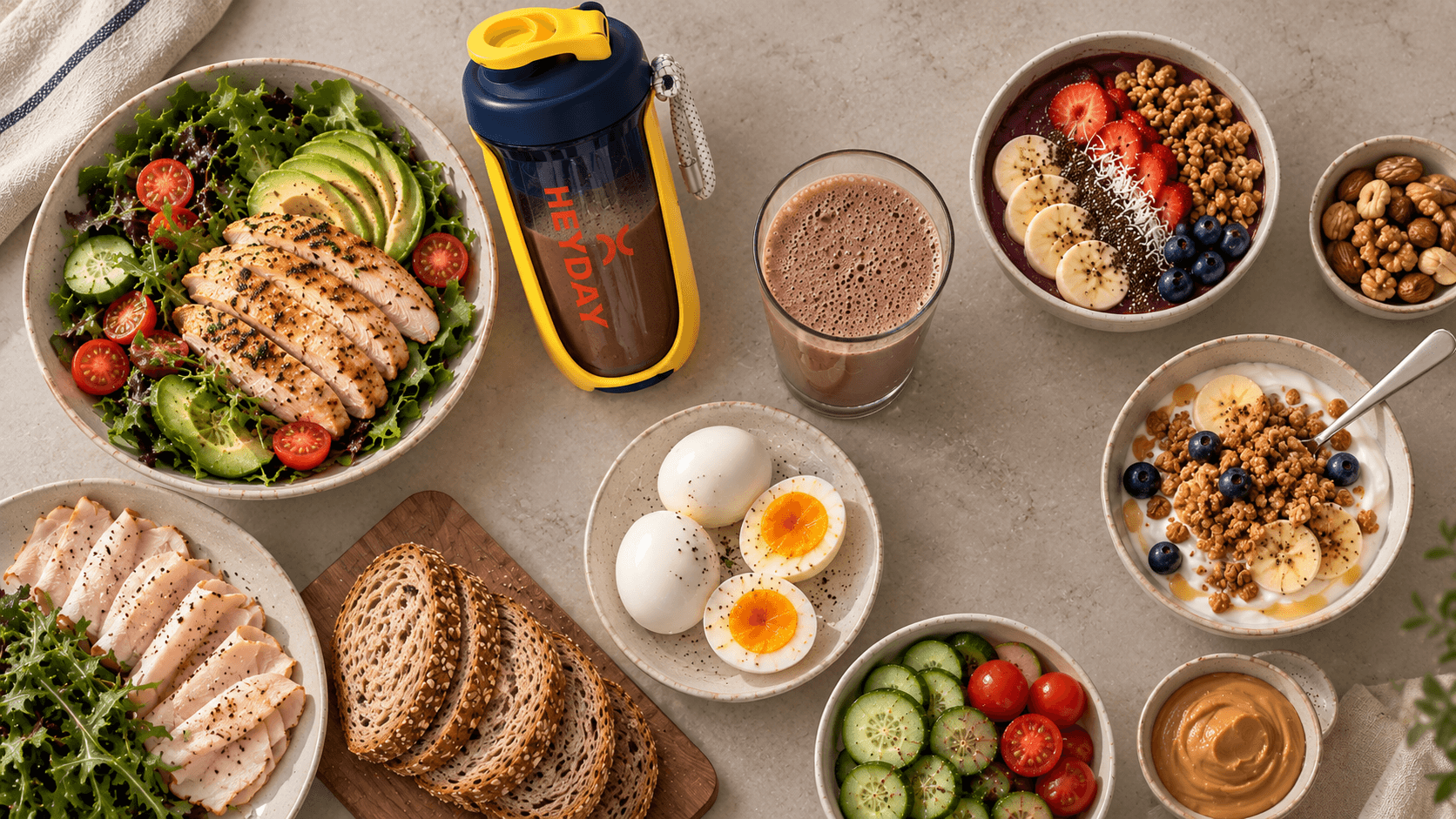
Eating more protein doesn’t mean eating less. You’re simply substituting some foods with higher-protein ones, rather than purposefully reducing the overall quantities you eat. It’s a swap rather than a cut.
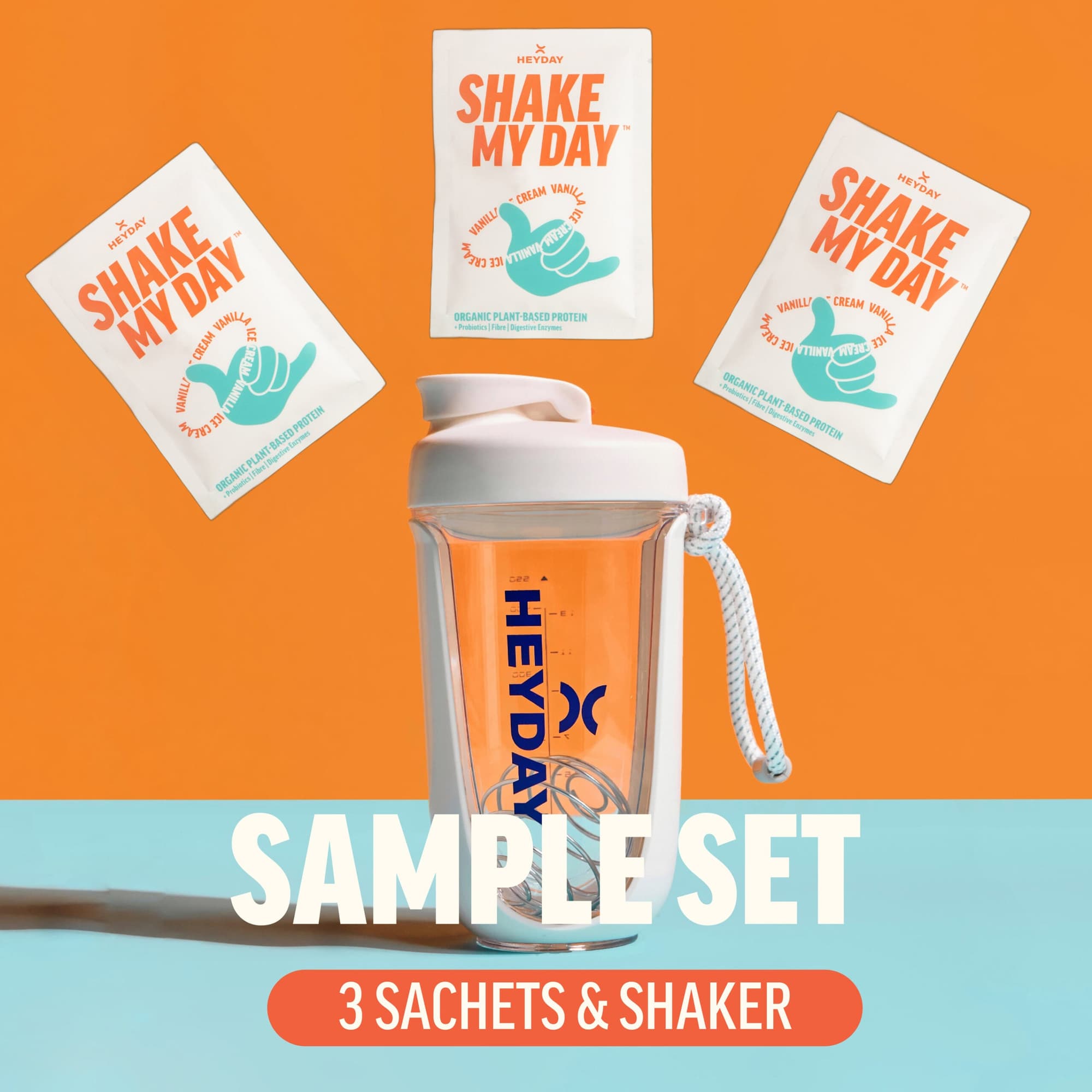
Not only that, the range of protein-rich foods you can sub in is huge and there are some amazingly tasty options. We’re confident that you’ll find some meat-free protein-based meals and Heyday shakes so delicious that you’ll want to keep them in your everyday meals for the long run.
So how much protein should you eat each day?
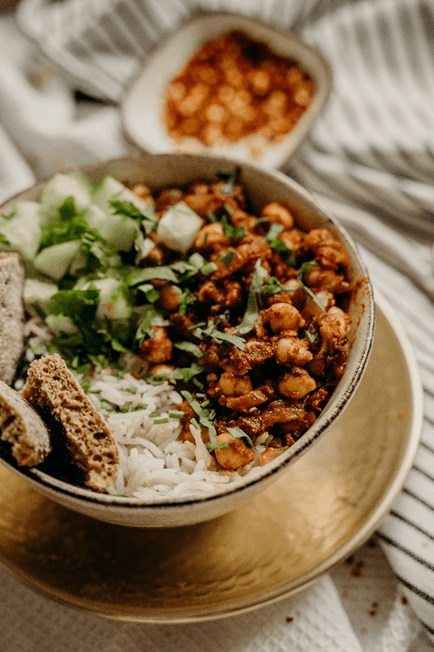
The Thai RDI is 50g of protein per day (the figure used on Thai nutrition labels, based on 2,000 kcal a day), or roughly 10–15% of total daily calories. This is the minimum amount to make sure you don’t fall short of protein.
If you’d like to get around 30% of your daily calories from protein, on an average 2,000 calorie per day diet that equals around 150g of protein per day – or you can multiply your own typical daily calories by 0.075 to get the exact number for you.
That may seem like a lot to get from food, especially if you are on a plant-based diet! But don’t worry, simply getting closer to this number will already be a great start. And of course, that’s also where protein powders can come in and lend a hand.
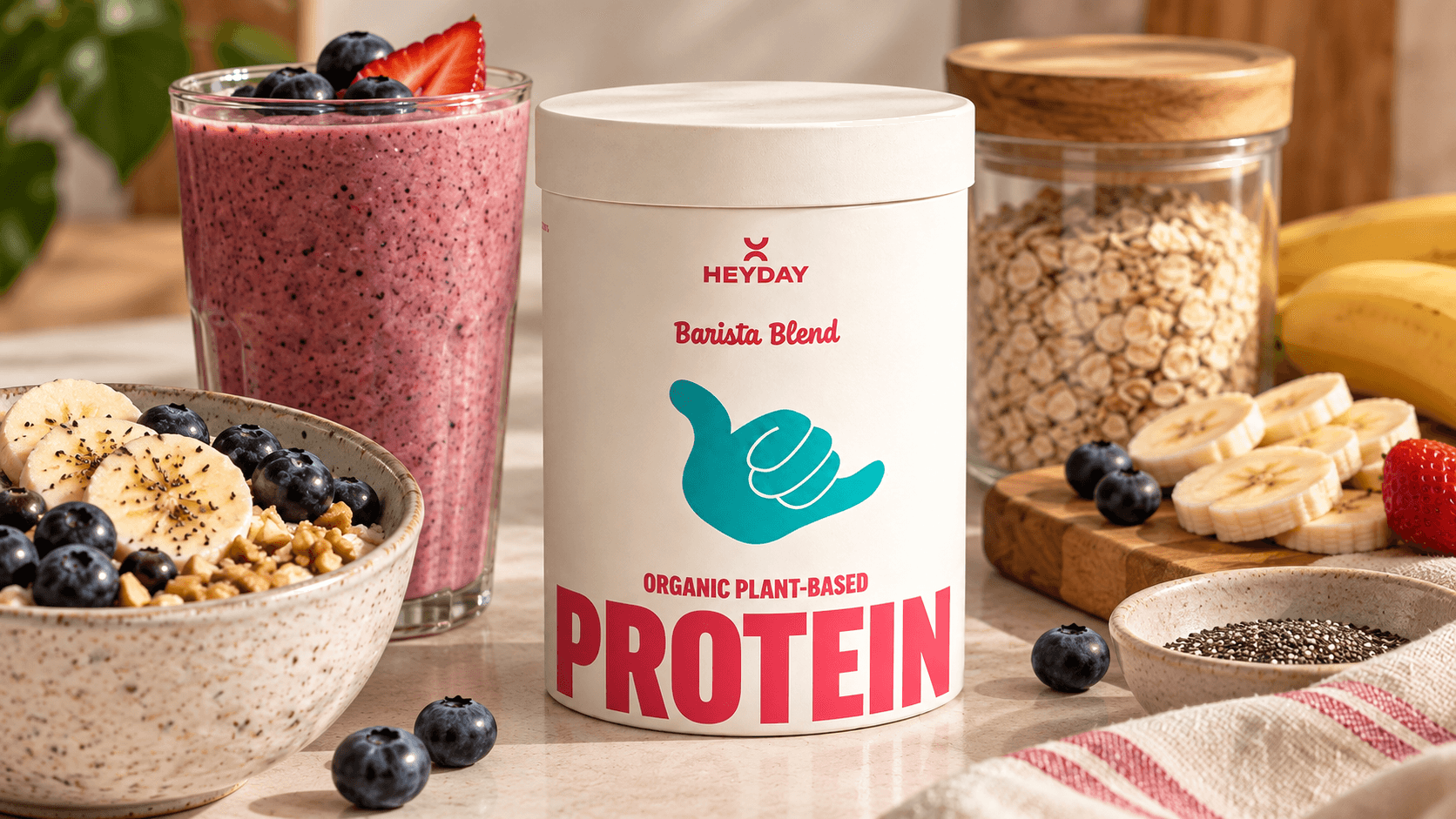
They contain protein in a much more concentrated form than what you’d get by eating the underlying foods, so they can be a convenient way of getting that additional protein in and hitting your targets. For example, our Organic Plant-Based Protein has 29–31g of high quality plant-based protein and 2.7–4g of fibre per (extremely delicious) 40g serving, depending on flavour.
Also remember to spread your protein intake throughout the day rather than having it all in one sitting, and to have a protein-rich breakfast if you can.